With household electricity prices having shot up in April and due to rise sharply again in October, there’s more incentive than ever to find ways of reducing how much electricity you use at home.
Here are some useful tips to help your household save on your electricity bill.
- Turn appliances off, rather than keeping them on stand-by – almost all can be turned off without upsetting their settings, but check the manual if you’re unsure. The Energy Saving Trust reckons you can save around £55 a year with this one measure. Alternatively, look at investing in a stand-by saver or smartplug for those which need power all the time.
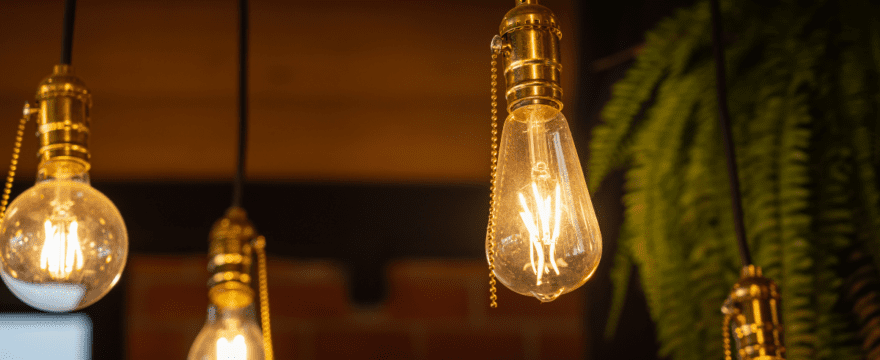
- Replace tungsten, halogen or fluorescent light bulbs with LED ones – the saving on a 100-watt tungsten bulb is up to £13 a year, £6 for a 60-watt and £4 for a 40-watt bulb. Multiply that by the number of bulbs you could replace and you can soon see how soon the new bulbs will pay for themselves, especially as you’ll save more as prices rise.
- Use your washing machine less & lower – make sure it’s full before starting a cycle to reduce the weekly total by at least one run and set the wash cycle for 30C (modern powders are effective at this). You can save around £28 a year by doing this.
- Avoid using a tumble dryer if you can – drying clothes outside or on a rack inside can save you around £60 a year.
- Keep showers short – keeping them to four minutes each can save a typical household £70 a year, as well as use less water which is good for the environment.
- Be kettle-wise – only put in the amount of water you need (that’ll save you at least £11 a year) or just enough for a vacuum flask to make hot drinks with for the rest of the day.
- Ditch the dishwasher if you can, or only do a cycle when it’s full. That can save you at least £14 a year.
- Buy more energy-efficient devices when you have to replace them – modern appliances and devices will typically use less electricity than the ones they replace, but they vary a lot. An A+++-rated fridge-freezer will save around £320 in electricity over its life compared to an A+ model. So it will probably be worth paying more for a more efficient model.
- Use the microwave for heating up food where you can – it will be quicker and is much more efficient than a hob.
- Turn off lights in rooms you’re not using – this can save a typical household around £20 a year.
- Make your fridge and freezer energy misers with these tips – 1. Check the temperature isn’t lower than it need be – between 3 and 5C is ideal for your fridge, -18C for the freezer; 2. If you can, cover and let food cool before putting it in the fridge – to avoid making the fridge cool it; 3. Cleaning the coils at the back of your fridge will make them more effective and use less power.
- Be clever with your computer – when replace desktop PCs, get a laptop and only plug it in to the mains when the battery is low. That will also enhance the life of the battery.
Of course, these are great ways to save electricity, and no matter what your heating system is, it is good to reduce waste. But, for many bills will still be high and now may be a good time, if you have the budget, to invest in a new eco-friendly heating system. Installing a heat pump to replace your current heating system is one solution worth looking at. It heats your water, and provides heating throughout the home all sourced from a renewable source (the ground or air). There is also funding available for homeowners from the Energy Savings Trust. Well worth looking into. We will also soon be rolling out training for Heat Pumps to Heating Engineers in the North-east, so if you’re a business and interested in getting trained, or a homeowner looking for an installation, we can help you.
Get in touch
For more information about energy-saving, get in touch.
Aberdeen Training Centre aims to revolutionise energy training by providing high-quality training and assessment for plumbing & heating engineers, electricians, and people new to the industry.
Leave a Reply